


.png)
If you’re looking at trucking jobs for the first time, you’ve probably noticed two things right away:
Recruiting hype, vague promises about pay, and a dozen different “paths” that all sound the same can make it hard to tell what’s real. Not all carriers are built the same, and not all carriers are worth your time when looking to start your CDL career.
We’re here to help you cut through some of that noise and understand what’s No sugarcoating. No scare tactics. Just what the process looks like, step by step, and what a CDL career can realistically turn into.
Let’s start with the “why,” because trucking certainly isn’t for everyone. But, when it fits your lifestyle, it fits well.
A CDL is a federally regulated license. Once you earn it, it’s valid nationwide and tied directly to what you’re qualified to operate, not who you know or where you went to school.
What matters over time is:
That’s one reason trucking continues to employ a large number of people across the country. The Bureau of Labor Statistics consistently lists heavy and tractor-trailer driving as one of the largest occupations in the U.S., driven by the simple reality that freight has to move.
Trucking doesn’t have a complicated career ladder. Most drivers follow some version of this path:
There’s no mystery about how you move forward as a professional driver. Time on the road, safe miles, and reliability carry more weight than titles or networking.
A CDL gives you geographic flexibility that a lot of jobs don’t. Work anywhere in the US, so long as you can drive there. Freight moves in every state, and drivers are needed in rural areas, cities, and everything in between.
That matters if:
You’re not locked into a single job market, not tied down to any specific office location, and can take your trucking job across the country if you want. Unlike many jobs, changing employers doesn’t reset your career. Your experience and license remain intact.
Commercial driving comes with responsibility whether a company advertises it or not. Once you’re in the seat, you’re accountable for decisions that can’t be handed off to anyone else.
That includes:
For drivers who prefer being trusted to do the job correctly rather than having every move supervised, this level of responsibility is a defining part of the work.
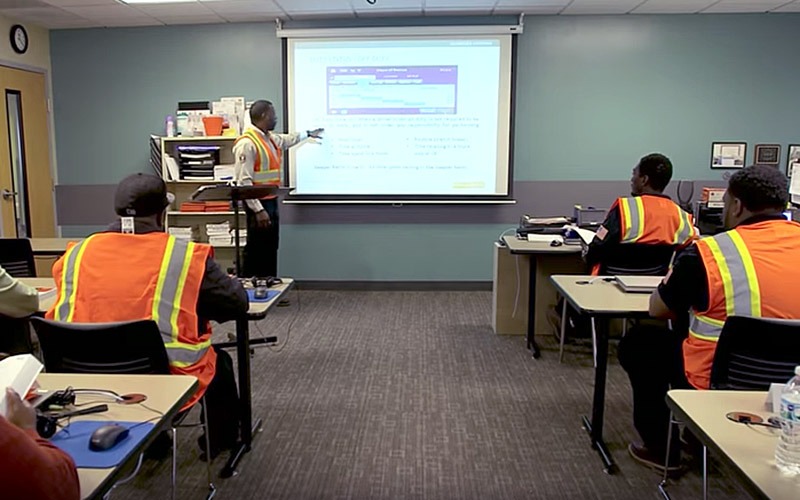
Most long-term CDL careers start with a Class A CDL, which allows you to operate combination vehicles (tractor-trailers).
You’ll also need to decide whether to pursue:
The Federal Motor Carrier Safety Administration sets the federal standards, but states administer the tests.
When you test for your CDL, the type of truck you use matters. If you take your skills test in an automatic transmission, your license will come with an automatic-only restriction.
What that means in real terms:
If you test in a manual transmission, you can legally drive both manual and automatic trucks.
For beginners, the trade-off looks like this:
There’s no universal “right” choice. The important thing is understanding that the restriction is tied to how you test, not how you drive later.
Endorsements are additional qualifications you add to your CDL that allow you to haul certain types of freight or equipment. Most new drivers start without them, and that’s normal.
Common endorsements include:
Early in your career, endorsements are less about pay and more about options. They can:
Many companies will help drivers add endorsements after they’re hired.
Before you can start CDL training, you have to meet a set of baseline requirements. Basic requirements are straightforward:
Understand that there is no “type” of person who is best suited for a trucking job. Trucking is accessible to all individuals, from all walks of life, who want to take their career into their own hands.
How you train matters, because it affects both your learning experience and your job options afterward. Most beginners choose one of three paths:
1. Private CDL Schools
You pay tuition upfront but keep full control over where you work afterward.
2. Community Colleges / Workforce Programs
Often lower cost, sometimes longer timelines.These provide more of an academic, classroom-based structure.
3. Company-Sponsored Training
Lower upfront cost, but usually includes a work commitment.
To see how structured training typically works at the state level, Illinois programs like C1 Truck Driver Training provide a good reference. These programs break training into classroom instruction, range practice, and on-road driving, which is the standard model nationwide.
The CDL skills test is designed to verify that you can operate a commercial vehicle safely. The test includes:
Standards are set federally by the FMCSA, but the test itself is administered by each state.
Your first year of driving is less about pay and more about learning how the job actually works day to day. You’ll experience dispatchers, different routes, unloading, various shipment commodities, and so much more for the first time. Be patient, willing to learn, and keep an open mind and you’ll learn more in your first year of your CDL job than you’d imagine.
This is also when drivers start to learn what they want long-term: OTR vs. regional, solo vs. dedicated, routine vs. variety. Company choice matters here, because the first job sets the tone for how you learn the industry. It also sets you up to truly understand what’s best for you, and how you can best.
This is where trucking starts to look less like “a driving job” and more like a trade with options. What your CDL career becomes depends less on ambition and more on how consistently you build experience and keep your record clean.
The first year is where most drivers decide whether trucking is right for them. Nearly all new drivers start in OTR or broad regional roles, not because companies are being difficult, but because those lanes expose you to more situations faster.
Once you’ve proven you can run safely and consistently, your options start to widen. This is when many drivers shift away from “whatever lane is available” toward work that fits their life better.
Common moves during this phase include:
Pay varies by lane, equipment, and region, but the American Trucking Associations consistently reports that experienced, safe drivers command better schedules and higher earning potential over time—not overnight, but steadily.
A CDL career isn’t fast money, and it isn’t passive work. What it offers instead is clarity and portability.
If you’re willing to:
Then trucking offers a nationally recognized skill, steady long-term demand, and multiple ways to shape your career over time. For beginners looking for a practical trade with real responsibility, starting a CDL career remains one of the more reliable paths available.